
Guide to Git Commands
Git is a powerful 🛠️ version control system that helps developers 👩💻 manage and track 🔍 changes to their codebase. Whether you are a 🆕 beginner or an experienced 🧑💻 developer, understanding essential Git commands is crucial for collaboration 🤝 and efficient development.
In this blog, we’ll explore key Git commands with interactive explanations 🧩 and practical examples. Let’s dive 🏊♂️ in!
1. Setting Up Git
Before you start 🏁 using Git, you need to configure your user 👤 information:
# Set your name
git config --global user.name "Your Name"

# Set your email
git config --global user.email "youremail@example.com"
Why it matters:
These settings identify 👤 you as the author of changes 🔄 in your commits.
2. Initializing a Git Repository
To start tracking 🛤️ a project with Git, initialize it as a repository 📁:
# Initialize a Git repository in your project folder
git init
Example:
cd my-project
git init
This creates a hidden 🕵️ .git folder in your project, signaling that it’s now a Git repository.
3. Checking the Status of Your Repository
To view 👀 the current state of your repository:
git status
🤔 Interactive Tip:
Run this command frequently to see which files 📂 are staged, modified ✏️, or untracked.
4. Adding Files to the Staging Area
Before committing, you need to stage changes 🔄:
# Add specific files
git add filename

# Add all files
git add .
Example:
git add index.html
This stages the index.html file for the next 🛤️ commit.
5. Committing Changes
Commit your staged changes 🔒 with a message 💬:
git commit -m "Your commit message"
✅ Best Practice:
Write ✍️ clear and concise commit messages to describe what the changes 🔄 do.
6. Viewing Commit History
To see 👀 a log 📜 of all commits:
git log
Example:
git log --oneline
This shows a compact summary 📝 of your commit history.
7. Cloning a Repository
To copy 📋 an existing repository to your local machine 🖥️:
git clone repository_url
Example:
git clone https://github.com/user/repository.git
This creates a local copy 📂 of the remote 🌐 repository.
8. Pushing Changes to a Remote Repository
To upload 📤 your commits to a remote 🌐 repository:
git push origin branch_name
Example:
git push origin main
This pushes changes to the main branch of the remote repository.
9. Pulling Changes from a Remote Repository
To update 🔄 your local repository with changes from the remote:
git pull origin branch_name
Example:
git pull origin main
This merges remote changes into your local branch 🌿.
10. Creating and Switching Branches
Branches 🌿 allow you to work on new features independently:
# Create a new branch
git branch branch_name

# Switch to a branch
git checkout branch_name

# Create and switch in one step
git checkout -b branch_name
Example:
git checkout -b feature-login
This creates and switches to the feature-login branch 🌿.
11. Merging Branches
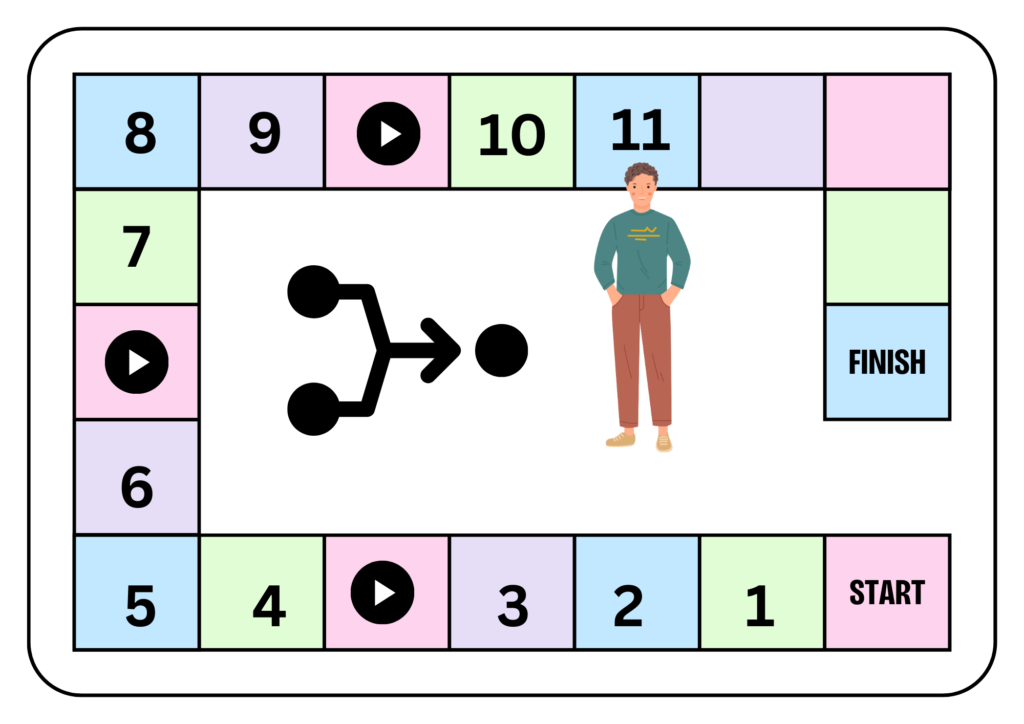
To merge changes from one branch 🌿 into another:
git merge branch_name
Example:
git merge feature-login
This merges the feature-login branch 🌿 into the current branch.
12. Resolving Merge Conflicts
Conflicts ⚔️ occur when changes overlap. Git marks the conflict areas in your files 📄:
# After resolving conflicts, add the resolved files
git add filename

# Commit the resolution
git commit -m "Resolved merge conflict"
💡 Tip:
Carefully review 👀 conflicting changes to ensure nothing important is lost.
13. Stashing Changes
To temporarily save 💾 changes without committing:
git stash
To apply stashed changes later 🕒:
git stash apply
14. Viewing Differences Between Commits
To see 👀 what has changed between commits:
git diff
Example:
git diff HEAD~1 HEAD
This compares 🆚 the latest commit with the one before it.
🎉 Conclusion
Devops Multi cloud Training
Choose the training style that fits your schedule — Self-Paced or Live Interactive Sessions. Both include hands-on projects, expert support, and lifetime access.
| Feature | Self-Paced Training | Live Training |
|---|---|---|
| 🎯 Mode | 🎥Pre-Recorded Session | 🧑🏫Live Class + Recordings |
| 💼 Projects | 🕒 Weekend Real-Time Projects | 📅 Weekdays + Weekend Real-Time Projects |
| ❓ Doubt Clearing | 📞 Weekend Live Support Session | 🧠 Anytime Doubt Clearing Session |
| 👥 Career Support & Mentorship | ❌ No | ✅ Yes |
| 🎓 Global Certification Training | ❌ No | ✅ Yes |
| 🔑 Access | ♾️ Lifetime Access | ♾️ Lifetime Access |
| 💰 Fees | ₹4,999 (2 x ₹2,500) | ₹7,999 (2 x ₹4,000) |
| ℹ️ For More Info | Explore Self-Paced Training | Explore Live Training |